
-

Email

News Date:
2026-09-08Item NO.:
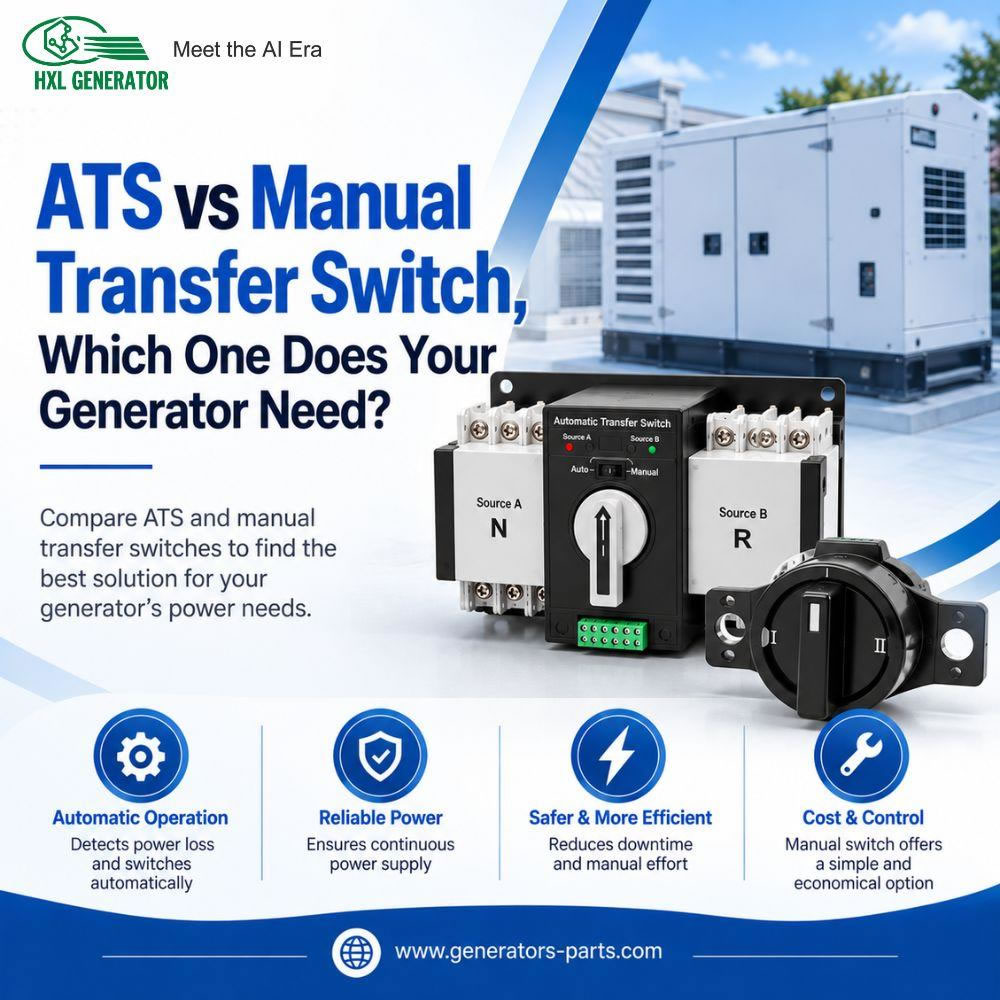
ATS Vs Manual Transfer Switch, Which One Does Your Generator NeedHave you ever stood in the dark during a power cut, generator running outside, with no clue how to get that power safely into your home or business? That confusion is exactly why so many people end up asking the same question, ATS vs manual transfer switch, which one actually fits your setup?
If you already work with generator parts for your backup power system, you know a transfer switch is not optional, it is the piece that decides how smoothly that switch happens.
This blog breaks down both switch types, so you can pick the right one without any guesswork.
A transfer switch sits between your generator and your electrical panel. Its job is to stop the generator and the main power grid from ever connecting at the same time, since that combination can be dangerous for people and equipment alike.
Without one, you would need to disconnect your home or business from the grid by hand before connecting a generator, which is risky and, in some regions, against local code.
A manual transfer switch does exactly what its name suggests, it needs you to flip it. When the power goes out, you start your generator, then walk over to the switch and move it from utility power to generator power by hand.
This setup works fine if someone is always around, but it will not help much if the power cuts out while everyone is away from home.
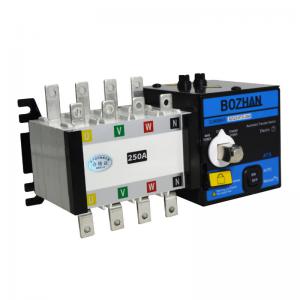
An automatic changeover switch, more commonly called an ATS, watches your incoming power around the clock. The moment it senses an outage, it starts the generator and shifts your electrical load over within seconds, no one needs to touch anything.
An ATS dual power transfer switch is built to manage exactly this back and forth, so grid power and generator power never touch each other by accident.
Once you compare them side by side, the real question becomes less about which one is better and more about which one fits how you actually use your generator.
That is the core of the ATS vs manual transfer switch debate. It is not really about which one is built better, it is about how hands on you want to be during an outage.
A small workshop that only loses power a few times a year does not need much. A manual switch is usually enough there.
A cold storage warehouse or a clinic running equipment overnight has different needs. Waiting even a few minutes for someone to notice the outage could cost thousands or put someone's safety at risk. That is where an ATS earns its higher price tag.
Before you buy anything, match the switch to how your generator is actually used, not just how much it costs.
A reliable transfer switch generator pairing only works when both pieces are sized correctly together. Mismatched ratings are one of the most common mistakes buyers make.
A blog post rarely mentions what happens after you decide between automatic and manual. Working with the right changeover switch manufacturer matters just as much as the switch type itself.
As a quick tip, ask any automatic transfer switch supplier for a free sample before a bulk order. It lets you check build quality and wiring first, instead of trusting a spec sheet alone. Ratings also range from smaller 63A units up to 630A, 1250A, and beyond for larger installations.
Sometimes the easiest way to decide is to see everything laid out together.
| Factor | Manual transfer switch | Automatic transfer switch (ATS) |
|---|---|---|
| Operation | Switched by hand | Switches on its own |
| Upfront cost | Lower | Higher |
| Best suited for | Occasional outages, small setups | Critical facilities |
| Response time | Depends on how fast you react | Usually just a few seconds |
| Maintenance | Minimal, fewer moving parts | Periodic testing recommended |
| Typical ratings | Varies by load | Commonly 63A up to 1250A |
Whichever switch fits your setup, the goal stays the same, keep your power reliable and your people safe. If you are still unsure, contact a supplier who can explain amperage and pole count before you make any decisions.
Many generator owners find that sourcing the switch and the surrounding generator parts from one supplier makes the whole setup far less stressful, with fewer vendors and one place to ask when something does not fit right.
A manual switch needs someone to flip it during an outage. An ATS detects an outage and automatically switches the power.
It is possible for smaller setups, but most regions require a licensed electrician since it connects directly to your main panel.
Match it to your generator's maximum output. Common options range from a 63A unit for smaller generators up to 100A or higher for commercial setups.
For hospitals, cold storage, or any place a short outage causes real losses, yes. For occasional home backup, a manual switch is often enough.
If you have stone inquiry, please leave us a message, we will reply you as soon as we can!